
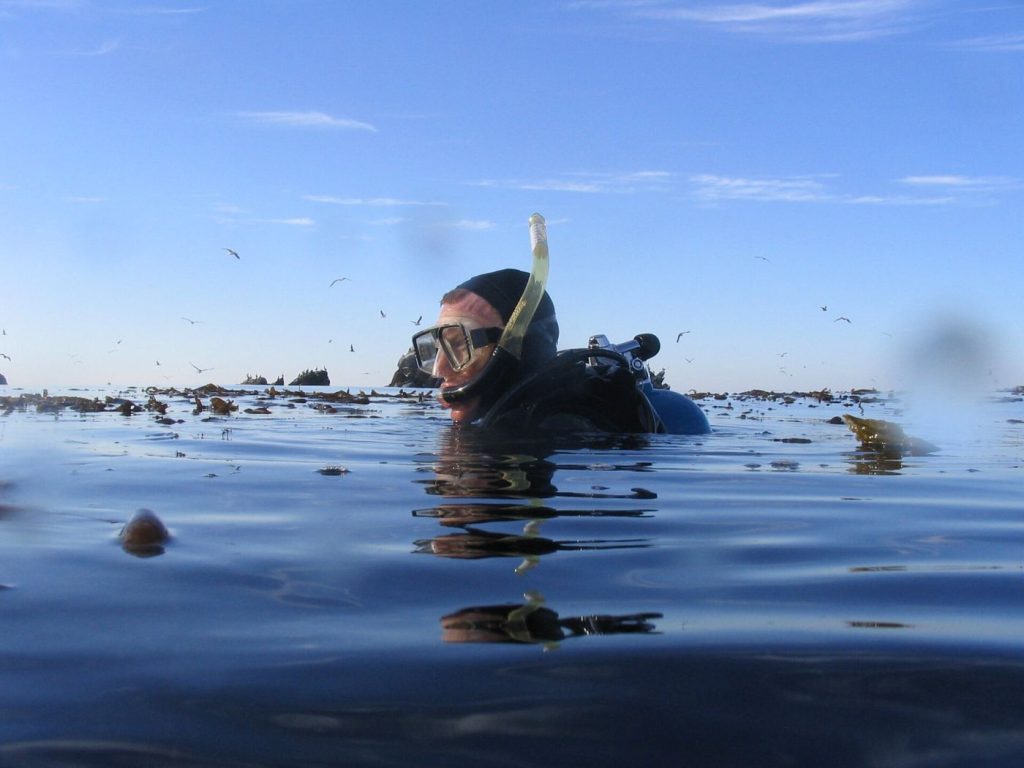
Along cold coastlines, giant kelp forests shelter fish, feed abalone and dampen the force of waves, but marine heatwaves have thinned or erased them in many places within a few seasons. Conservation biologists are now looking beneath the visible loss to the genetic diversity hidden within each forest, because stands that look identical can differ sharply in their tolerance of warm water. Samples collected from surviving patches after heatwaves sometimes carry gene variants linked to heat resistance, suggesting that a few tough individuals seed recovery when conditions ease. In other regions, forests were genetically uniform before the heat arrived, and their collapse left no local survivors to regrow. That contrast is driving a new restoration strategy. Instead of planting kelp from a single convenient source, teams catalogue the genetic makeup of remaining stands, preserve spores from many lineages in culture collections and choose planting stock matched to local conditions, with some deliberate mixing to prepare for warmer futures. The approach borrows from forestry and crop science, where seed banks protect options against a changing climate. Kelp’s life cycle complicates the work, since its microscopic stages must be raised in laboratories before young plants can be attached to lines or reef structures underwater.
What the Evidence Shows
Early restoration trials suggest that where kelp comes from can matter as much as how it is planted. Outplants drawn from heat-exposed populations have survived warm spells that killed stock from cooler refuges, while mixed plantings sometimes grow more vigorously than any single source. Researchers are careful not to move kelp casually between distant regions, because genetic mixing can also swamp local adaptations or carry disease. The goal is a library, not a monoculture: a stored record of regional diversity that managers can draw on thoughtfully as seas warm. Protecting surviving forests remains the cheapest and most reliable conservation step, since an intact stand preserves its own genetics, habitat and spore supply together. Kelp forests also support fisheries and store carbon in tissue that drifts to deep water, giving restoration a value beyond the coastline itself. As monitoring improves, divers and drones can track which patches endure each summer, feeding a living map of climate resilience. The emerging picture is hopeful but demanding: recovery is possible where diversity survives, and the time to bank that diversity is before heatwaves remove it, not after the forest has already gone. Reporting and analysis from sources such as NASA track the same developments, and specialists following kelp forest genetic diversity say the direction is now consistent across independent lines of evidence.
The Wider Context
Funding bodies are watching kelp forest genetic diversity closely because the work sits at the junction of basic curiosity and practical return. Grant panels increasingly ask for a path from discovery to application, while researchers push back that the most valuable uses of fundamental science are rarely the ones written into the original proposal. The tension is productive when both sides stay honest about timescales.
What Happens Next
The long view on kelp forest genetic diversity is that fields advance by accumulation rather than by single announcements. This result adds a solid, checkable piece to a structure many teams are building, and its authors have shared their data so the piece can be tested from every side. That is how the picture eventually becomes reliable enough to act on. You can follow related developments in our coverage of science.
It is also worth remembering how quickly the picture in this area has changed before. Positions that looked settled a few years ago have been revised as new data arrived, and the same humility is appropriate now. The strongest coverage of this subject, and the most useful advice, tends to come from sources that update their views openly when the facts move, rather than defending an earlier position long after it has stopped fitting the evidence available.
