
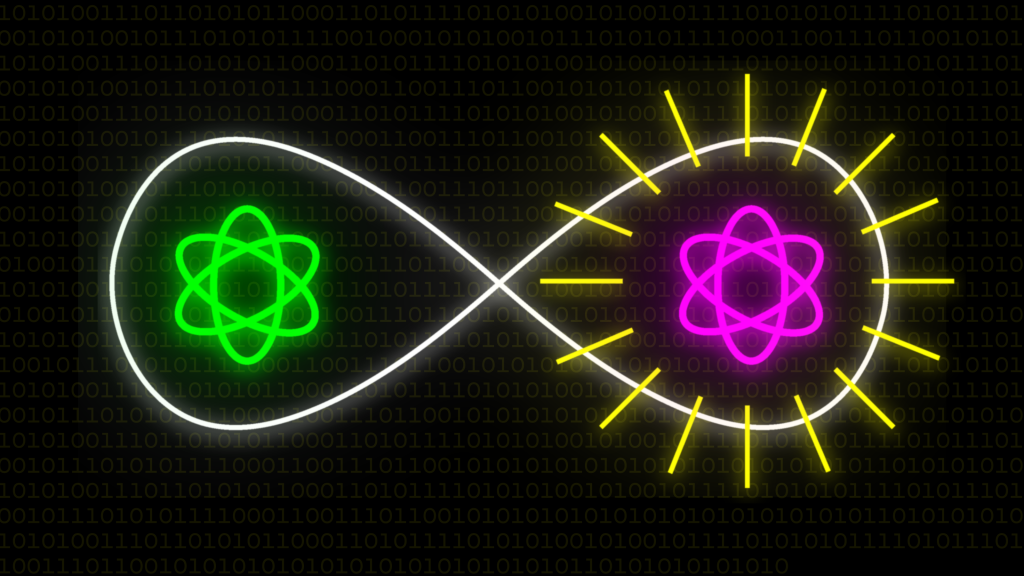
Explore the principles, challenges, and future of quantum communication security in this thorough analysis of protocols and real-world applications.
Understanding Quantum Communication
Quantum communication is a rapidly evolving field that applies the laws of quantum mechanics to transmit information in a secure manner. Unlike traditional communication systems, which rely on mathematical algorithms for encryption, quantum communication uses physical properties of quantum particles. These properties include superposition, where a particle can exist in multiple states at once, and entanglement, where two or more particles become linked and can instantly affect each other regardless of distance.
Such features provide new ways to safeguard information, making it possible to detect any attempt at unauthorized access. As the threat from increasingly powerful computers grows, especially with the development of quantum computers, quantum communication offers a promising solution for protecting sensitive data. This technology is drawing the attention of governments, researchers, and industry leaders around the world who are searching for next-generation security tools.
The Core of Quantum Security: Key Distribution
At the heart of quantum communication lies Quantum Key Distribution (QKD), a method that enables two parties to share encryption keys with security guaranteed by the laws of physics, rather than computational difficulty. With QKD, any attempt to eavesdrop on the key exchange introduces detectable disturbances, alerting legitimate users to potential threats. For a comprehensive review of how QKD works and its safety measures, see this Quantum Key Distribution security analysis. QKD protocols, such as BB84, use single photons to transmit key information, and their quantum nature ensures that any interception changes the state of the particles, making eavesdropping evident.
This feature makes QKD superior to many classical systems in certain scenarios. Although QKD is not a universal solution, it provides a strong foundation for secure communication lines, especially when combined with classical encryption methods. In fact, the combination of quantum and classical techniques is often recommended to maximize security in practical deployments. As researchers and engineers experiment with real-world QKD implementations, new insights into its strengths and limitations continue to emerge.
Quantum Protocols and Their Security Features
Quantum communication relies on several protocols designed to ensure secure data exchange. The most well-known is BB84, developed in the 1980s, which uses polarized photons to encode information. Another important protocol is E91, which leverages quantum entanglement to distribute keys between users. Both protocols exploit the quantum properties of qubits, allowing them to exist in multiple states simultaneously. This means that any attempt to measure or copy the key by an attacker will disturb the quantum state, revealing their presence.
The National Institute of Standards and Technology (NIST) has published research on quantum-safe algorithms and protocols, which can be found at the official NIST post-quantum cryptography report. These protocols not only aim to protect against current threats but also anticipate the risks posed by future quantum computers. As the field progresses, new protocols are being developed to address specific needs, such as higher transmission rates, longer distances, and improved resilience to noise and interference. Researchers are also studying ways to combine quantum protocols with traditional cryptography to provide layered security.
Threats Facing Quantum Communication Systems
Despite its theoretical strengths, quantum communication is not immune to real-world threats. Side-channel attacks, which exploit information leaked through physical devices rather than the protocol itself, can compromise a system’s security. Implementation flaws, such as imperfect photon detectors, can also introduce vulnerabilities that attackers may exploit. Device imperfections, like signal loss or noise, are another challenge, as they can make it easier for attackers to go undetected.
Researchers continue to develop countermeasures, such as improved hardware and better error correction techniques, but no system is completely foolproof. The U.S. Department of Energy has discussed vulnerabilities in quantum networks in its quantum communication overview. In addition to these technical risks, there are concerns about the human element, such as errors in system configuration or maintenance. Security in quantum communication, like any technology, is a moving target that requires ongoing vigilance and adaptation as new threats are discovered.
Physical and Environmental Challenges
Quantum communication systems face unique physical and environmental challenges. One major issue is signal loss over long distances, especially when using optical fibers. Photons can be absorbed or scattered as they travel, which limits the effective range of quantum communication links. While classical signals can be amplified, quantum signals cannot be copied or amplified without losing their security features due to the no-cloning theorem.
This makes it difficult to maintain secure communication over global distances. Environmental factors such as temperature fluctuations, vibration, and electromagnetic interference can also affect the stability of quantum channels. Researchers are working on solutions like quantum repeaters, which use entanglement swapping to extend the range of quantum networks without compromising security. New materials and advanced photonic devices are being developed to reduce signal loss and improve the reliability of quantum links. These challenges make real-world deployment of quantum communication systems more complex but also drive innovation in the field.
Real-World Applications and Limitations
Quantum communication is being tested and implemented in a variety of real-world settings. Financial institutions, government agencies, and military organizations are among the first to explore its use for securing critical data transmissions. In banking, quantum communication can protect transactions and customer information from interception. Governments use it to shield classified communications and diplomatic exchanges. The military is interested in its potential for secure command and control systems.
However, the technology is not without limitations. Its ability to secure long-distance communication is still limited by technological barriers, such as signal loss over optical fibers and the need for trusted nodes to relay information. Recent updates on these real-world trials and the progress in overcoming such issues are available from the European Telecommunications Standards Institute at their Quantum-Safe Cryptography page.
Another limitation is the high cost and complexity of quantum hardware, which makes widespread adoption challenging. Furthermore, integration with existing infrastructure requires careful planning and significant investment. Despite these hurdles, pilot projects and testbeds are providing valuable insights into practical deployment strategies. Some cities have launched metropolitan quantum networks, while international collaborations are testing quantum communication via satellites.
Quantum Communication in Space
One of the most exciting developments in the field is the use of satellites for quantum communication. Space-based quantum networks can overcome the distance limitations of ground-based optical fibers. In 2017, China launched the first quantum communication satellite, Micius, which successfully demonstrated quantum key distribution between ground stations thousands of kilometers apart.
This achievement marked a significant milestone and inspired similar initiatives in Europe, North America, and other regions. Satellite-based quantum networks can provide secure links between continents, supporting global banking networks, diplomatic communications, and international research collaborations. However, operating in space introduces new challenges, such as dealing with atmospheric turbulence, precise beam alignment, and the harsh conditions of the space environment. Agencies like the European Space Agency and NASA are actively researching these issues.
The Role of Standards and Regulation
As quantum communication technology matures, the need for international standards and regulatory frameworks becomes more pressing. Standards bodies, such as the International Telecommunication Union (ITU) and the European Telecommunications Standards Institute (ETSI), are working to define protocols, interoperability requirements, and security benchmarks for quantum networks. Regulatory agencies are also considering how to manage the deployment of quantum communication infrastructure, especially with regard to privacy, data protection, and national security.
This standardization effort is essential for ensuring that quantum communication systems can work together across borders and industries. It also helps foster trust among users and encourages investment in the technology. The development of standards will play a key role in the global rollout of secure quantum communication solutions. For further reading, the ITU Focus Group on Quantum Information Technology for Networks provides updates on ongoing international efforts.
Future Prospects of Quantum Security
The future of quantum communication security is bright, with ongoing research focused on making systems more practical, scalable, and affordable. Advances in quantum repeaters, error correction, and integrated photonics are expected to expand the reach of secure quantum channels. Satellite-based communication will likely play a key role in establishing global quantum networks.
As technology matures, quantum communication is expected to become an important part of cybersecurity strategies, especially for protecting critical infrastructure and sensitive data. Collaboration between research institutions, industry, and government agencies will be crucial for overcoming the remaining technical and practical challenges. With continued innovation, we can expect quantum communication to move from specialized use cases to broader adoption in the coming years.
Conclusion
Quantum communication security represents a significant leap forward in protecting information. While current systems face technical and practical challenges, ongoing research and international collaboration are paving the way for more secure and reliable communication networks. As quantum technology develops, its impact on cybersecurity will continue to grow. The journey from laboratory experiments to real-world applications is well underway, and the lessons learned from early deployments will shape the future of secure global communication. With the combined efforts of scientists, engineers, and policymakers, quantum communication has the potential to transform the way we safeguard data in the digital age.
FAQ
What makes quantum communication secure?
Quantum communication uses the principles of quantum mechanics, such as superposition and entanglement, to detect any attempt to intercept or eavesdrop on the transmitted data. This means that any unauthorized observation changes the state of the quantum particles and alerts the communicating parties.
Are quantum communication systems in use today?
Yes, several organizations and governments are testing and deploying quantum communication systems, especially for sensitive or high-security applications. Examples include quantum networks in major cities and satellite-based experiments.
What is the main challenge for quantum communication?
The main challenges include signal loss over long distances, high costs, the need for specialized hardware, and the complexities of integrating quantum systems with existing communication infrastructure.
Can quantum communication be hacked?
While quantum communication is highly secure in theory, practical implementations may have vulnerabilities due to device imperfections, side-channel attacks, or human error. Ongoing research aims to address these issues.
Will quantum communication replace classical encryption?
Quantum communication is likely to complement, rather than replace, classical encryption methods. It is especially useful for critical data and high-security environments where maximum protection is required.
How does satellite-based quantum communication work?
Satellite-based quantum communication uses satellites to transmit quantum keys between ground stations over large distances. This approach helps overcome the range limitations of fiber-optic networks and can enable secure global communication.
What industries are most interested in quantum communication?
Industries such as banking, government, defense, and healthcare are particularly interested in quantum communication due to their need for high levels of data security and privacy.
Are there international standards for quantum communication?
International organizations are actively working on developing standards and guidelines for quantum communication systems to ensure interoperability and security across different networks and countries.
