
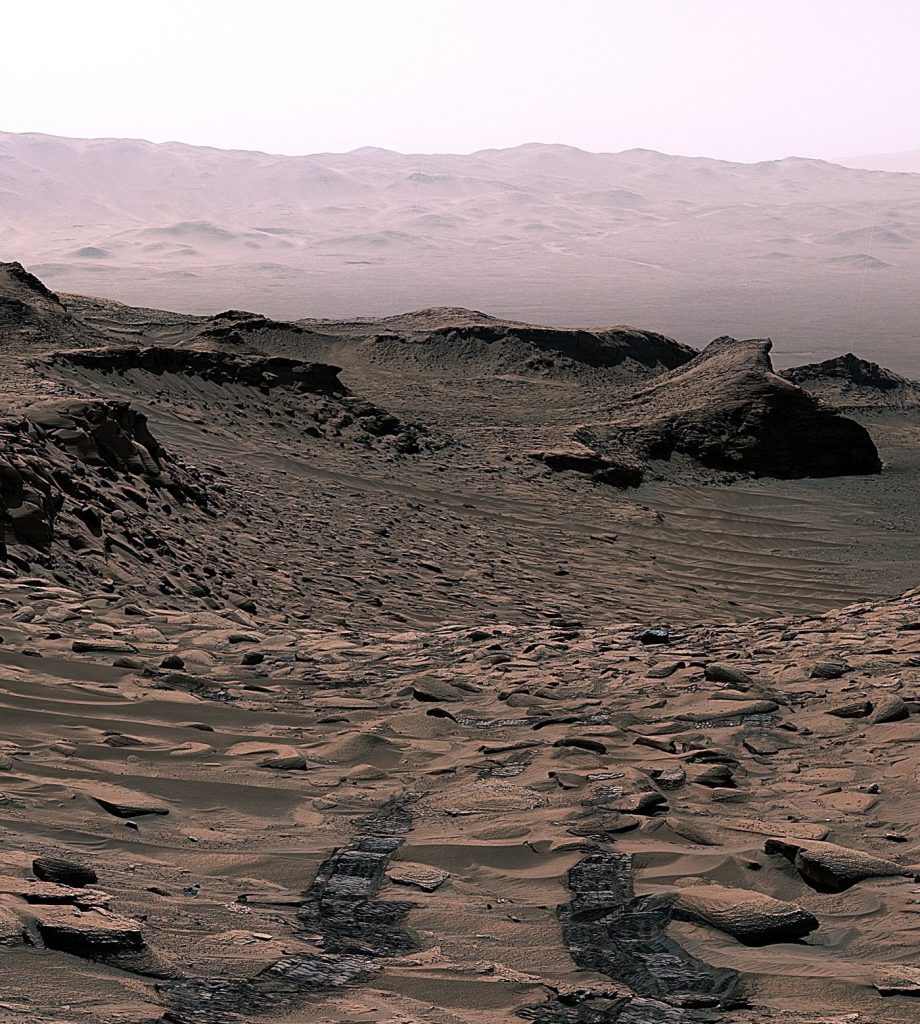
Dust is the defining weather hazard of Mars. Fine particles, lifted by winds in an atmosphere barely one percent as dense as Earth’s, can grow from local gusts into regional storms and, in some years, into planet-encircling events that dim the sun for weeks. Robotic missions have taught engineers to respect that dust. It coats solar panels, reducing power, it abrades seals and mechanisms, and during global storms it changes atmospheric density enough to complicate spacecraft arriving from Earth. For future human landings, the stakes rise considerably. Crews will depend on solar power or other surface systems that dust can degrade, on visibility for landing and surface travel, and on air filtration to keep abrasive, chemically reactive particles out of habitats. Mission planners therefore study storm seasons the way terrestrial sailors study hurricane seasons, identifying safer landing windows and regions where storms tend to form later or less often. Orbiters that monitor Martian weather daily provide the forecasts such planning needs, tracking dust as it rises and spreads. Understanding how storms start, where the dust comes from and what finally clears the air has become essential groundwork for sending people rather than another item of scientific curiosity.
What the Evidence Shows
Dust also interacts with technology in subtler ways that laboratories on Earth are working to solve. Electrostatic charge builds as particles swirl and rub, potentially interfering with electronics and clinging stubbornly to suits and equipment. Engineers test coatings, airlocks and cleaning systems, including vibration and electrostatic removal, to keep panels and radiators working through a long surface stay. Power planners increasingly favour a mix of sources, so that a dusty month does not threaten life support, and mission rules may require reserves sized for the worst historical storms. Scientists, meanwhile, use storm observations to refine models of the Martian climate, including how dust heating drives winds that lift still more dust in a self-reinforcing loop. Those models feed back into landing-site selection and into the design of weather stations that early crews would deploy. Mars will never offer benign weather, but each robotic season adds to a practical manual: when to arrive, where to land, how to build, and how much margin to keep when the sky itself turns against the mission. Reporting and analysis from sources such as NASA track the same developments, and specialists following mars dust storm mission planning say the direction is now consistent across independent lines of evidence.
The Wider Context
Funding bodies are watching mars dust storm mission planning closely because the work sits at the junction of basic curiosity and practical return. Grant panels increasingly ask for a path from discovery to application, while researchers push back that the most valuable uses of fundamental science are rarely the ones written into the original proposal. The tension is productive when both sides stay honest about timescales.
What Happens Next
The long view on mars dust storm mission planning is that fields advance by accumulation rather than by single announcements. This result adds a solid, checkable piece to a structure many teams are building, and its authors have shared their data so the piece can be tested from every side. That is how the picture eventually becomes reliable enough to act on. You can follow related developments in our coverage of science.
It is also worth remembering how quickly the picture in this area has changed before. Positions that looked settled a few years ago have been revised as new data arrived, and the same humility is appropriate now. The strongest coverage of this subject, and the most useful advice, tends to come from sources that update their views openly when the facts move, rather than defending an earlier position long after it has stopped fitting the evidence available.
