
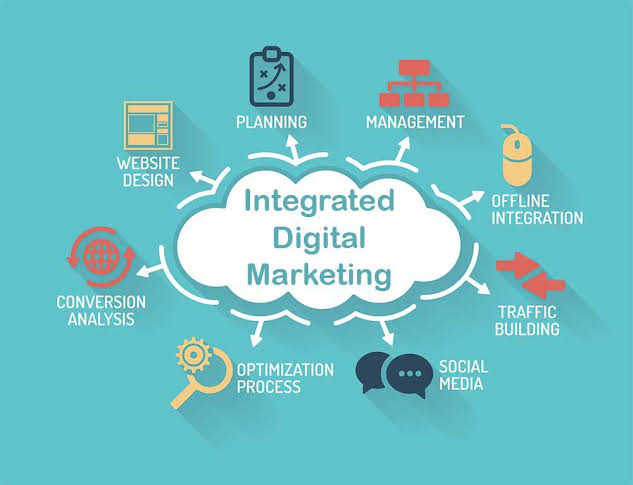
The gap between businesses that grow consistently and those that plateau often comes down to one thing: how well their digital channels work together. As consumer behavior fragments across email inboxes, search engines, and messaging platforms, brands that treat each channel in isolation tend to see diminishing returns. The more effective approach is integration — coordinating strategy across owned, earned, and emerging channels so that each touchpoint reinforces the others.
This article examines three high-impact digital marketing channels that industry analysts increasingly highlight as critical for medium and large businesses: email marketing, e-commerce SEO, and conversational commerce through messaging apps.
Why Email Still Anchors Digital Marketing Strategies
Despite the proliferation of social media platforms and paid ad channels, email continues to deliver one of the highest returns on investment in digital marketing. Data from multiple industry reports consistently place email ROI at 36:1 or higher, making it a channel that serious marketers cannot deprioritize.
The key distinction between effective and ineffective email programs is segmentation depth and automation sophistication. Generic broadcast emails have lost their edge; what performs today is triggered sequences, behavioral segments, and lifecycle campaigns that respond to what users actually do rather than just who they are.
Businesses that partner with a specialized email marketing agency typically see better results than those managing campaigns in-house without dedicated expertise. The reason is structural: agencies maintain ongoing testing frameworks, deliverability monitoring, and platform-specific best practices that internal teams rarely have the bandwidth to develop.
- Welcome sequences that qualify leads within the first 7 days
- Cart abandonment flows with dynamic product recall
- Re-engagement campaigns targeted at dormant subscribers
- Post-purchase nurturing for upsell and loyalty development
E-Commerce SEO and the WooCommerce Opportunity
WooCommerce powers a significant share of global e-commerce stores, particularly among small-to-medium businesses that built on WordPress. As these businesses scale, many discover that the out-of-the-box SEO configuration is insufficient for competitive search visibility.
Technical SEO for WooCommerce requires handling product schema markup, managing duplicate content across category and tag pages, optimizing site speed under WooCommerce’s plugin weight, and structuring internal linking to pass authority efficiently through large product catalogs.
Investing in seo woocommerce as a dedicated practice — rather than a general SEO afterthought — produces meaningfully different outcomes. Stores that optimize at the product and category level, with structured data and crawl budget management in place, tend to rank for transactional queries that drive direct revenue rather than informational traffic that rarely converts.
Common technical issues that undermine WooCommerce SEO performance include:
- Unoptimized product image alt text and file sizes slowing Core Web Vitals
- Default permalink structures that are not keyword-rich
- Missing canonical tags on faceted navigation pages
- Thin category descriptions that fail to signal topical authority
The Rise of Messaging Commerce and Line Mini Apps
In Southeast Asia — particularly Thailand — Line is not simply a messaging app; it is the dominant social and commercial platform for a substantial portion of the population. For brands operating in this market, building within the Line ecosystem is not optional if they want to meet consumers where they spend time.
The line mini app format allows brands to deploy lightweight web applications directly inside the Line interface, enabling transactions, loyalty programs, appointment booking, and customer service flows without requiring users to leave the app. This frictionless experience is particularly valuable for industries where repeat purchases and relationship management are central to the business model — retail, food and beverage, healthcare, and financial services among them.
From an analytics standpoint, Line Mini Apps offer first-party data collection in an environment that is increasingly difficult to track via third-party cookies. Brands that build engagement infrastructure inside Line are essentially building a direct relationship channel that is algorithm-independent — a significant strategic advantage as paid social costs continue to rise.
Connecting the Channels: Where Integration Pays Off
The individual performance of email, e-commerce SEO, and messaging apps is meaningful. The compounding effect of running them in coordination is where real growth acceleration happens.
Consider a mid-sized retail brand: organic search traffic, driven by well-optimized product and category pages, fills the top of the funnel. Email captures and nurtures visitors who do not convert on first visit. A Line Mini App serves as the loyalty and reorder layer for customers who have already purchased. Each channel feeds data back into the others — email open behavior informs retargeting, Line engagement signals inform email segmentation, and SEO keyword data informs product naming and content strategy.
Agencies that understand multi-channel coordination at this level — such as Relevant Audience, which operates across these three domains in the Thai market — provide value beyond execution. The strategic architecture of how channels interlock is often where the most significant performance gaps exist.
Measuring What Matters Across Channels
A common failure mode for businesses running multiple digital channels is measuring each in isolation, with channel-specific KPIs that do not aggregate into a coherent picture of customer acquisition cost and lifetime value.
Best-practice measurement frameworks for integrated programs include:
- Multi-touch attribution models that credit email, organic, and direct touchpoints proportionally
- Cohort analysis that tracks how customers acquired through different channels perform over 90, 180, and 365 days
- Incrementality testing to isolate the genuine contribution of each channel versus baseline behavior
- Unified customer data platforms that merge email identifiers, Line UIDs, and search session data into single profiles
Without this infrastructure, businesses risk optimizing for channel-level metrics — email open rates, keyword rankings, Line friend counts — while missing the broader picture of which combinations of touchpoints actually drive revenue.
Selecting the Right Digital Marketing Partner
For medium and large businesses evaluating digital marketing partners, the most important criterion is not expertise in any single channel but the ability to operate across channels with a coherent strategy. Specialists who optimize in silos create efficient individual tactics that may still underperform when the overall customer journey is fragmented.
Questions worth asking prospective partners include: How do you connect email performance data to SEO content decisions? What does your reporting look like for clients running both search and messaging channels? How do you account for attribution across owned and earned channels?
The answers reveal whether a partner thinks in systems or in channels — a distinction that becomes more consequential as program complexity grows.
Conclusion
Growth for mid-to-large businesses in competitive digital markets increasingly depends on channel integration rather than channel optimization in isolation. Email marketing, e-commerce SEO, and messaging platforms like Line each offer distinct leverage points. When they operate as a coordinated system — sharing data, reinforcing messaging, and covering the full customer lifecycle — the compounding effect is significantly greater than the sum of its parts.
Brands ready to evaluate or upgrade their integrated digital marketing approach can learn more at https://www.relevantaudience.com/
Contact US
Address: 2556, Building 66 Tower, Room.1802,
Floor 18, Sukhumvit Rd, Bangna-Nuea,
Bangna, Bangkok, 10260
Phone: 020385055
Email: info@relevantaudience.com
Website: https://www.relevantaudience.com/
