
The digital gaming industry continues to evolve as technological capabilities, interface standards, and user expectations change. Within this broader development, Mahjong-inspired games represent an interesting combination of traditional cultural imagery and contemporary digital design. Developers have adapted familiar Mahjong symbols, tile patterns, and visual themes into interactive formats that can operate across computers and mobile devices. This transformation has created a distinct category of digital entertainment while also introducing mechanics that differ considerably from traditional Mahjong.
The Evolution of Mahjong in Digital Entertainment
Mahjong originated as a traditional tile-based game and developed into several regional variations with different rules and playing styles. Its recognizable visual identity has made it suitable for digital adaptation. Traditional characters, bamboo imagery, circular symbols, dragons, flowers, and other decorative elements can be translated into graphical assets that remain recognizable while fitting modern interfaces.
Digital adaptations do not necessarily attempt to reproduce the original game. Instead, developers often use Mahjong as a thematic foundation for games based on symbol combinations, grids, reels, or other automated systems. The emphasis is placed on visual recognition, interaction, and clearly defined game mechanics.
The transition from physical tiles to digital symbols also changes how information is presented. A physical Mahjong set requires players to observe and organize tiles themselves, whereas digital systems can automatically identify combinations, calculate outcomes, activate features, and display relevant information. This automation allows more complex mechanics to be integrated into a relatively simple interface.
The Role of Interface Design
Interface design is an important component of modern Mahjong-themed games. Since the screen replaces physical tiles, developers must ensure that symbols remain distinguishable and that important information is presented without unnecessary complexity.
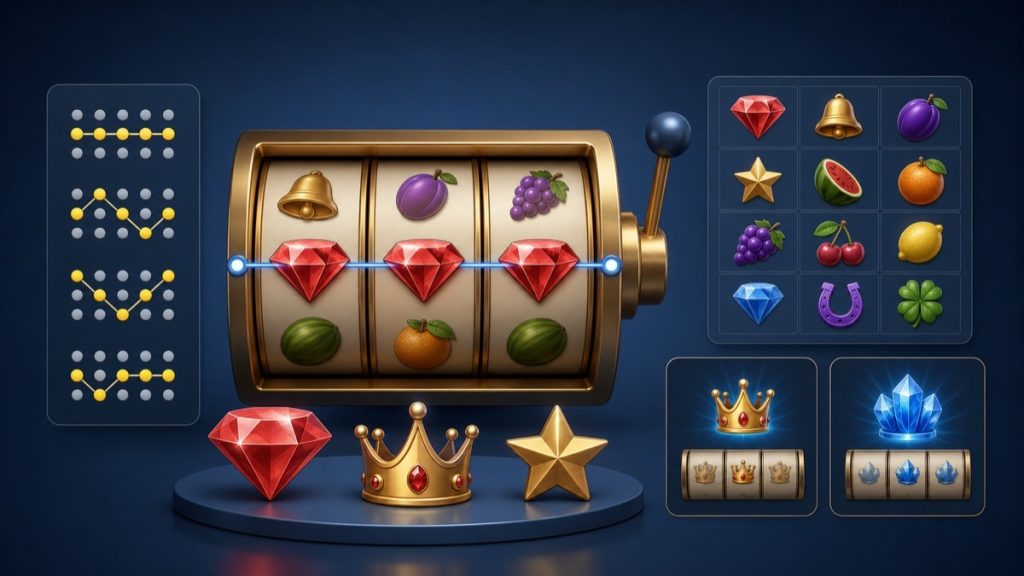
A typical interface may include a central playing area, symbol displays, feature indicators, control buttons, and information menus. Each element has a specific function. The playing area communicates the primary game state, while menus provide explanations about symbols and special mechanics.
Mobile compatibility has also influenced interface development. Touchscreens require controls that are sufficiently large and clearly separated. At the same time, detailed Mahjong imagery needs to remain legible on smaller displays. Developers therefore have to balance decorative elements with practical usability.
Animation is another important component. Moving symbols, transitions, and visual effects can indicate when a combination has occurred or when a special feature has been activated. When used appropriately, these effects provide information rather than serving only a decorative purpose.
Understanding Scatter Mechanics
Special symbols are frequently used to introduce additional layers of interaction. Among them, scatter symbols have a distinctive function because they can be connected to feature activation rather than ordinary symbol combinations.
The term Scatter Mahjong generally describes Mahjong-themed digital gameplay in which scatter symbols are incorporated into the game’s mechanics. Their exact function varies between titles. Some systems require a specific number of scatters to appear within an active area, while others may use different conditions based on symbol positions or game modes.
The important point is that scatter rules are not universal. A player should consult the game’s information panel to determine how many symbols are required, where they must appear, and which feature they activate. Assuming that every title uses the same scatter conditions can lead to an incorrect understanding of its mechanics.
Scatter symbols are often visually distinct from regular symbols. Developers may use different colors, frames, animations, or decorative elements to make them easier to identify. This visual distinction allows users to recognize an important event without examining every symbol individually.
How Scatter Features Can Activate Bonus Rounds
A common application of scatter symbols is the activation of a separate game feature. Depending on the title, this may involve free rounds, additional symbol arrangements, multipliers, or modified gameplay conditions.
For example, a game may specify that a certain number of scatter symbols must appear before a bonus round becomes available. Once the condition is met, the interface can display an animation and provide information about the newly activated feature.
Free-round mechanics can introduce a different set of rules from the standard game state. Certain symbols may receive additional functions, while the visual layout or symbol distribution can change. The number of available rounds and the conditions for additional rounds are determined by the individual game’s design.
Multipliers are another possible feature. A game may apply a multiplier to specific combinations during a bonus sequence. However, this is not an inherent property of scatter symbols. The presence of a scatter does not automatically indicate that a multiplier will be applied.
Symbol Combinations and Automated Systems
Digital Mahjong games rely on automated systems to identify qualifying symbol arrangements. Unlike physical Mahjong, where players manually inspect tiles and determine relationships according to established rules, digital systems process the displayed symbols according to predefined game logic.
This automation makes the outcome calculation immediate. When a qualifying arrangement appears, the interface can highlight the relevant symbols and display the corresponding result. If a special condition is met, the system can automatically activate the associated feature.
Different games can use different structures. Some employ reels, while others use grids or cascading arrangements. In a cascading design, symbols involved in a qualifying combination may disappear and allow replacement symbols to occupy their positions. This can create multiple consecutive events within a single sequence.
The structure of the symbol system directly affects how players interpret the game. Clear visual indicators are therefore important, especially when several features can occur during one sequence.
Technology and Modern Mahjong Game Development
Advances in digital graphics have significantly changed how Mahjong themes are presented. High-resolution assets can reproduce tile textures, traditional patterns, and decorative details with greater clarity. Animation technology also allows developers to create more sophisticated transitions and feature effects.
Audio design contributes another layer of information. Distinct sounds can indicate ordinary combinations, special symbols, or feature activation. When combined with visual indicators, audio feedback can make the sequence of events easier to follow.
Performance optimization is particularly relevant for mobile devices. Games containing numerous animations and detailed graphical elements must be designed to operate efficiently across different hardware configurations. Developers need to consider loading times, responsiveness, screen resolution, and touchscreen interaction.
Information Transparency and Game Documentation
As digital games become more feature-rich, accessible documentation becomes increasingly important. Players need to understand the function of symbols, the conditions associated with special features, and the rules governing each game mode.
Information panels and paytables can provide these details in a structured format. A well-designed information section should explain ordinary symbols separately from special symbols and should identify the conditions required for feature activation.
Clear documentation also helps distinguish thematic elements from functional mechanics. A symbol may look significant because of its visual design but have no special function, while another symbol may appear relatively simple yet perform an important role within the game’s rules.
Modern Mahjong-Themed Game Structures
Contemporary digital Mahjong games can incorporate several design approaches, including fixed symbol layouts, reel-based systems, cascading combinations, expanding areas, and feature-specific rounds. These structures allow developers to reinterpret traditional Mahjong imagery without being restricted to the mechanics of physical Mahjong.
A Slot Mahjong game, for example, may use Mahjong tiles as its primary visual language while relying on automated symbol combinations and feature triggers rather than traditional tile-matching rules. The result is a digital format where cultural imagery, interface design, animation, and mathematical game structures operate together.
The continuing development of these games reflects a broader trend in digital entertainment: established cultural themes can be reinterpreted through modern technology while retaining recognizable visual characteristics. Understanding the distinction between traditional Mahjong rules and digital adaptations is essential when examining how these games function and how individual features, including special symbols and bonus mechanics, fit into their overall structure.
